

Mad as a Hatter!
A vacant home tax and the balance between work and wealth

“The subjects of every state ought to contribute towards the support of the government, as nearly as possible, in proportion to their respective abilities; that is, in proportion to the revenue which they respectively enjoy under the protection of the state.” Adam Smith, The Wealth of Nations, 1776
While I pass for a Crested Butte conservative, for some I’ve turned as pink as Democratic Socialist Zohran Mamdani, who suggested New York City tax non-residential luxury homes. Crested Butte’s Town Council is considering taxing vacant homes to cover funding shortfalls without adding to the financial burdens of our working families.
Crested Butte’s real estate and construction costs are soaring as the wealthy choose our schools and trails over congested commutes and hotter, lower elevations. The purchase price of an average home has tripled to $3 million over the last 10 years while the cost of re-paving a block has increased from $30,000 to $150,000. This flow of wealth distorts prices more generally. Our health care system balances its books by catering to wealthy visitors; our personal high-deductible premiums for a family of four cost $3,500/month and Town spends the equivalent of $1 of every $10 in our general fund on health care premiums.
Crested Butte’s financial pressures reflect a national trend of fewer people owning more. This wealth is increasingly inherited and not earned; the number of families paying taxes on inherited wealth has dropped 95% over the last 25 years. Having rich parents is the fastest way into elite schools, adding a patina of achievement to gilded lives. It’s not enough to be born on third base; it’s important for the wealthy to believe they hit a triple. As philanthropy and empathy go out of style, the NY Times suggested the wedding of Jeff Bezos, who is worth more than the annual economic output of ~50 countries, is “the moment American money stopped apologizing and decided it might as well enjoy itself”.
This wealth gap distorts priorities. As a biologist, I’m dumbfounded over plans to spend $1 billion on a ballroom, more than would be saved by a proposal to cut NSF’s biology budget 75%, presumably to control government spending. With research taking a backseat to socialites, Scott Turner, Secretary for Housing and Urban Development, kicked the National Science Foundation out of their building so he could have an executive dining room, a personal elevator, and upgraded parking. Why would we care about biology if our resources could otherwise be spent on fine dining and ballroom dancing? Ticks, Ebola, and hantavirus, oh my!
Our tax system has encouraged a flood of money into Crested Butte. Real estate investment is an important part of portfolio diversification and Colorado is a low property tax state (e.g. one-third of Texas’ rate). A common tax-avoidance strategy is to establish residency in a state with no income taxes (e.g., Texas and Florida) and buy real estate in Colorado resort towns.
On top of competing with the wealthy for housing and basic services, year-round residents pay sales tax year-round, which generates ~80% of the revenues for our general budget. Full-time residents also pay income tax to support the state budget, one-fourth of which is returned to local governments to pay for services.
So, how might we cover increasing costs without creating more of an affordability crisis for full-time residents? Our sales taxes are already high and we don’t have a homestead exemption to protect residents from escalating property values increasing their property taxes. A vacant home tax is attractive because it would avoid increasing the burden on local families while targeting the flow of wealth that is partly responsible for increased costs.
Some second homeowners have called the proposal “divisive”, “unfair”, and “exploitative”, expressing concerns about being singled out. However, “fair” seems to be in the eye of the beholder—e.g., jurisdiction shopping by the wealthy to minimize taxes doesn’t seem “fair”. Indeed, tax policy institutes don’t use “fair” for improving tax systems. Interestingly, right-leaning tax experts often emphasize neutrality (e.g., avoiding favoring Colorado real estate over Florida).
My analysis of a vacant home tax, which has been implemented in multiple other cities, focuses on whether it is reasonable and the consequences are positive. Since we already use residency as a category for taxation (e.g., Colorado residents pay income tax) as well as tax vacant properties at a higher rate on the basis that they generate less tax income, a vacant home tax is a reasonable tool.
I don’t worry that an empty home tax will chase second homeowners away for financial reasons, especially if we end up exempting long-time owners who bought homes under much different financial circumstances from the tax; taking care of core town assets will increase real estate values more than the tax drags them down.
I am not surprised at the outrage of some of the second homeowners. Who we tax, and for what, is an expression of values. In a country that taxes work while giving wealth a free pass, values, which are manifested by sacrifice, are out of fashion as credit cards magically cause discomfort to disappear. But Crested Butte has adopted a values-based decision-making approach committed to being authentic, bold, connected, and accountable. I don’t know where we will go with the proposal, which would ultimately have to be approved by the voters, but I’m glad that our community is having a hard, value-based conversation!
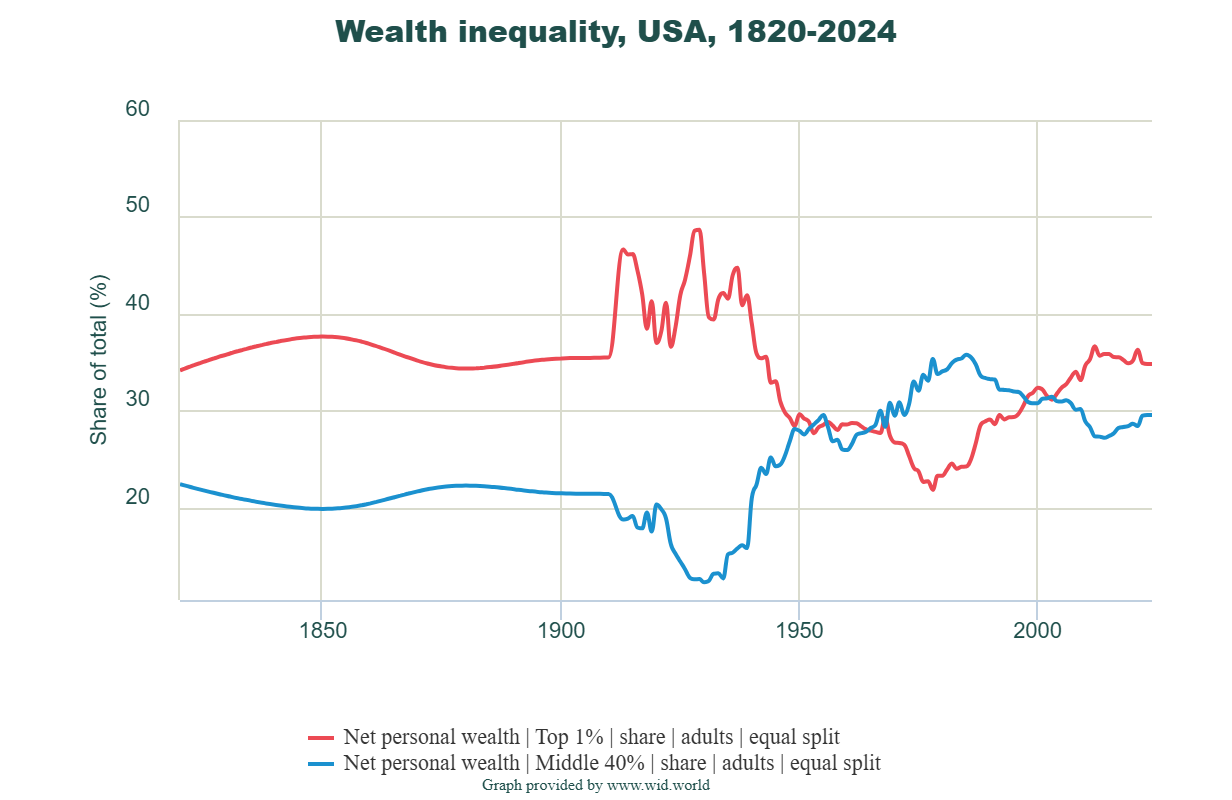
Nationally, I wonder if this a “rhyming” moment in history? On the eve of the French Revolution Jean Jacques Rosseau described a clueless princess who suggested the poor eat cake since they couldn’t afford bread. But I wonder if the appropriate cake metaphor is the journey that Alice started through Wonderland when she took a bite of cake.
“Alice: ‘Would you tell me, please, which way I ought to go from here?’
Cheshire Cat: ‘That depends a good deal on where you want to get to.’”
I’d like to keep Crested Butte real, including staying affordable for working families, avoiding a slide into a Potemkin village serving as a fantasy for the wealthy. I may be labeled a socialist for considering an empty home tax, but I’m happy to be joined by Adam Smith, father of capitalism, who supported progressive taxation.
One of my favorite books on the intersection between values, emotion, and political discourse is The Righteous Mind by Jonathan Haidt.
Check back in the fall to see what our community decides to do!
Great insight Ian, and thanks for giving the situation some air!!