

A New Dawn
From Carbon to Silicon

Fossil fuels or solar panels?
Human grey matter and/or computer chips?
Will artificial intelligence complement or replace human intelligence?
Three thousand years high priestess Pythia, possessed by Apollo at the Oracle of Delphi, provided glimpses of the future in metered poetry. Drawn to volcanoes and glaciers I cast my sight forward, however, by looking back to Norse mythology. The Skalds, Viking storytellers, explained life as the result of a cosmic dance of energy, information, and order with the human realm of Midgaard emerging from the fusion of fire and ice, an entropic balance of heat and cold, chaos and order.
Might there be another truth foretold in the travails of the god Loki, who used his cleverness to solve problems and in so doing, created bigger problems? Do fossil fuels, in making the modern world possible, come with their own challenges?
Weatherman supreme, RMBL’s billy barr, reported 17” of snow this fall, shattering the previous low of 30”, with higher temperatures bringing rain instead of snow. While this winter brought my first December rainbow in Crested Butte, who wants to spend Christmas skiing in rain? At the end of the 1970’s we averaged 132 consecutive days below freezing compared to 16 days now. Will we transition to renewables quickly enough to maintain some semblance of winter in CB?

I became more optimistic after listening to Bill McKibben, climate activist and author of Here Comes the Sun at the Mountain Towns 2030 Climate Summit in Breckinridge. As an elected official I stay current with relevant trends to keep up with building codes and climate policy, but I hadn’t realized that we had passed a global technological tipping point with the cost of renewables dropping so low.
Understanding the economics of energy is complicated. Biden’s Inflation Reduction Act created ~$30 billion of renewable subsidies in 2024, which have been largely discontinued under the Trump administration. Fossil fuels, on the other hand, have long received, and continue to receive, similar amounts. Fossil fuel companies sometimes argue that they don’t receive subsidies since they get tax preferences and not tax credits, but independent analyses indicate that after correcting for government support, renewables are cheaper.
One of the challenges with renewables is reliability since we can burn fossil fuel anytime. We can mitigate this problem by complementing wind and solar with natural gas, increasing storage capacity, and/or working out better ways to level out demand, such as offsetting domestic consumption with data center demand and creating financial incentives to shift consumption patterns. Battery technology has been improving rapidly which reduces the problem.
And while there are cost-effective solutions for renewables’ dependability challenges, fossil fuels have their own problems. Texas’ power grid failed in 2021 because freezing temperatures stopped natural gas heating, a problem they now avoid with renewables. Comanche 3, one of Colorado’s newer coal power plants, has been down about 20% of the time since it was built in 2010.
Another challenge for renewables, especially for transportation, is lower energy density. Gasoline packs ~60x more energy than the lithium-ion batteries used in EV cars, which reduces the range and efficiency of EV cars. This is offset in part because an EV delivers 60-90% of its energy to moving while gasoline only delivers 15-25%, with energy lost to combustion heat and piston friction. As with grid batteries, EV batteries are improving, with energy density doubling in the last 10 years.
Because parsing subsidies and hidden costs is challenging, one way of assessing renewables is to look at cost-driven markets. It’s one thing that blue state California gets two-thirds its energy from renewables and another that Texas leads the way on renewables. Internationally, in desperate need of cheap electricity Pakistan recently installed the equivalent of half of its electrical grid as standalone solar in eight months. In 2024 China installed 887 gigawatts of solar, almost 10% of the world’s estimated total electrical consumption of 10,000 gigawatts.
Looking forward, I predict that we have reached a combination of improving technology and declining cost such that the renewable transition will happen quickly. Despite fossil fuel’s advantages with storage (e.g., batteries are not necessary) and energy density, the cost effectiveness of renewables has made burning fossil fuels the equivalent of committing entropic malpractice. Why burn fossil fuels that took millions of years to accumulate when the daily harvest of sun and wind is cheaper?
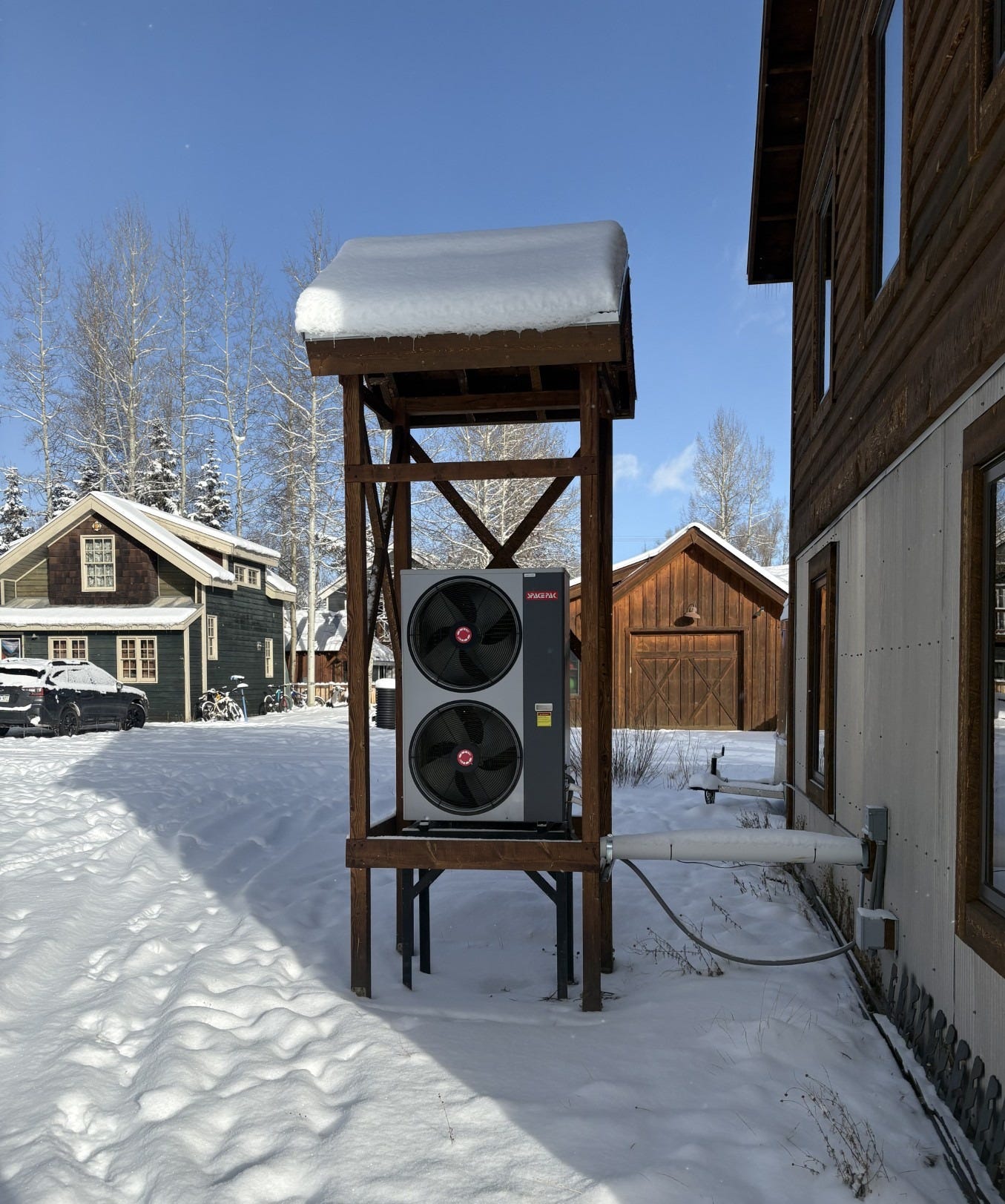
Renewable energy costs will continue to drop faster than fossil fuels because the technology is new, and more importantly, because of physics. For example, the efficiency of natural gas heating is limited to 100% of the heat stored in natural gas. Heat pumps work, however, by moving electrons around, taking advantage of changes in temperature, pressure, and phase transitions between liquid and gases (the Carnot cycle) and are 2-4x more efficient than natural gas.
While it seems inevitable that renewable energy use will accelerate globally, other parts of the future remain fuzzy. Will we make the transition quickly enough to avoid the more drastic consequences of climate change? Will we see reverse socialism, where the rich use their control of fossil fuels to reach into the pocketbooks of workers and drag down the economy with unnecessary energy costs? Will the US fall behind China, whose investment in clean energy is a core part of its economic policy, increasing productivity through lower energy costs, reducing dependence on fossil fuel imports, and grabbing a growing market away from the US?
Loki was often too clever for everyone’s good, a situation we seem to have put ourselves in with fossil fuels and climate change. But I wonder if there is an even larger problem lurking in the transition to silicon from carbon. The Norse god Odin prophesied a twilight of the gods, or Ragnarok, involving a universe-destroying battle followed by rebirth, led by a new generation of gods. Hopefully Ragnarok does not presage a generation of silicon-based AI-beings replacing humans.
As Loki demonstrated, wisdom, and not cleverness, will determine whether technology will improve our lives.
Bill McKibben’s Here Comes the Sun is a fast read if you are interested in learning more about the renewable transition. I am also a fan of Allen Best’s coverage of energy and water policy in Big Pivots. If you like it as much as I do, supporting his writing is a small but meaningful way to make the world better. He has an outsized impact and even modest donations are appreciated!
Excellent insight Ian and I hope the transition does occur as quickly as you predict. Is the current administration the last gasp of the fossil fuel industry’s dominance? Will we wake up and realize the economic and technological potential of an ‘energy race’ with China? Fingers crossed for the Elks and the entire planet.